


Editor’s Note: This article has been updated since it’s original publishing to correct that magistrate judges are elected court officers, but are not constitutional officers (as previously reported).
A Bulloch County constitutional officer and two court officials are facing legal action over what attorneys say is a failure to fulfill their duties as outlined in Georgia law.
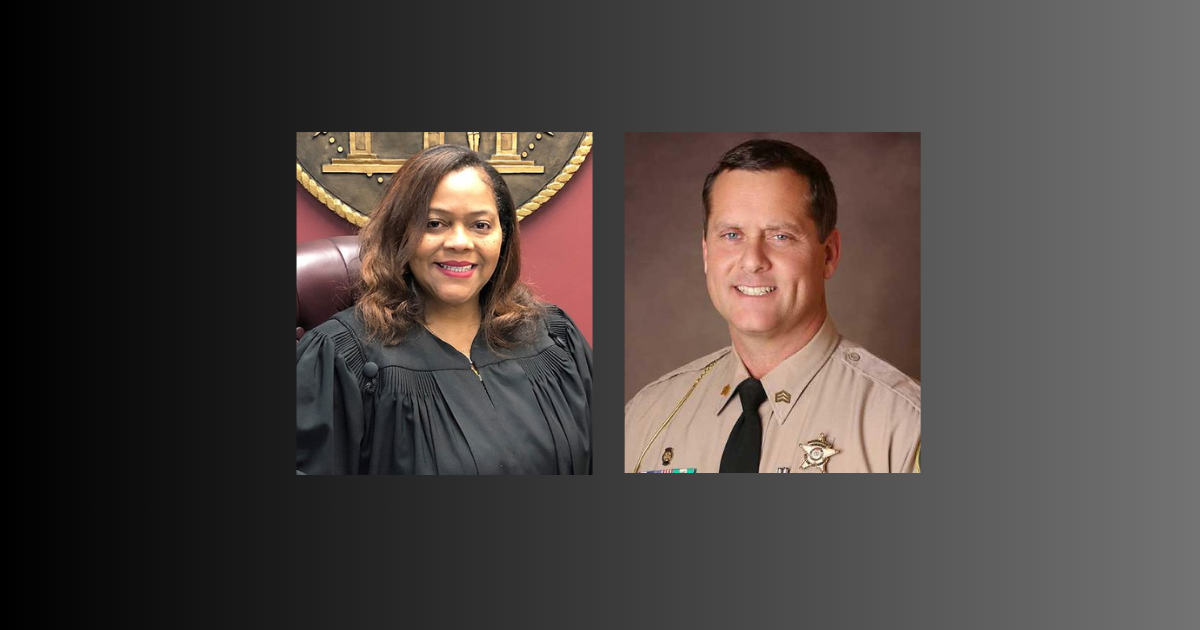
The proceeding filed in Bulloch County Superior Court last week names Chief Magistrate Judge Karen K. Riggs Jones, Chief Deputy Magistrate Judge Lynn Sapp, and Sheriff Noel Brown. The legal action deals with the issue of bond – a matter that has long plagued the judicial process in Bulloch County.
Long Standing Issue of Magistrate Judge Failing to Set Bond for Felony Offenses in Bulloch County
Bulloch County’s practices in magistrate court offer a stark contrast to the other 158 counties in Georgia where magistrate judges fulfill their responsibility as defined in Georgia statute. TheGeorgiaVirtue has reported on the issue a number of times over the last five years.
Magistrate judges are elected court officials that handle a number of things including warrants, civil claims under $15,000, county ordinance violations, and evictions, among other things.
Of issue here, magistrate judges preside over first appearance hearings for criminal offenses. These hearings are for formal announcement of charges against an accused person and to preliminarily consider the issue of bond.
By law, individuals facing misdemeanor charges are entitled to a bond irrespective of the charge so long as there are no other pending issues, like a probation violation or pending warrant. In many jurisdictions, bond schedules exist to streamline the process.
For felony offenses, Georgia law requires that an accused person be brought before a magistrate judge within 48 hours of their arrest to hear the allegations against them and determine if probable cause exists to bind the case over to superior court for further action. If the magistrate judge deems it appropriate, a bond can be set. If bond is denied, the issue of bond can be heard in superior court as the adjudication process makes its way through the courts.
Certain serious offenses, like murder, aggravated child molestation, kidnapping, and a host of others are not bondable by a magistrate judge and must be heard by a superior court judge.
Georgia law, and constitutional protections, also dictate that a person is entitled to a reasonable bond if the accused:
- does not pose a significant risk of fleeing from the jurisdiction of the court or failing to appear in court when required;
- poses no significant threat or danger to any person, to the community, or to any property in the community;
- does not pose a significant risk of committing any felony pending trial; and
- poses no significant risk of intimidating witnesses or otherwise obstructing the administration of justice.
When considering bond, judges must weigh these factors and consider the threat to the community, if any, against the possibility that the person is not guilty of the crime for which they have been accused. To do this, they often weigh ties to the community, current employment, custodial obligations, familial involvement and other factors. It is a heavy burden irrespective of its necessity.
In Bulloch County, the magistrate judges refuse to set bond for any felony offenses. This means that a person cannot be eligible for bond until they appear before a superior court judge. In order for this to happen, a person must obtain a lawyer who must file the appropriate paperwork and ask to be placed on the judge’s calendar for a hearing. The process can take two weeks to a month, resulting in job loss, financial strain, issues with child custody, implications for college enrollment for students, and a nullification of the presumption of innocence.
Alternatively, the District Attorney’s Office can agree to a Consent Bond Order to expedite the process, but the result is still weeks in jail before pre-trial release. Consent bonds aren’t always appropriate either, particularly for more serious offenses or if witnesses need to testify at a hearing before a judge.
The issues in magistrate court have existed for well over a decade. During the tenure of former Magistrate Judge June Braswell, a Standing Order instituted by superior court judges in the Ogeechee Judicial Circuit barred the magistrates from setting bonds in felony cases. It was never made clear why a duly elected court officer adhered to the Order when superior court judges have no authority over the duties of lower judges defined by law.
That order, however, is no longer in effect, and a new chief magistrate judge took office last year, but the practices regarding felony bonds have not changed.
As a result, people accused of crimes have languished in the Bulloch County Jail without bond due only to the fact that elected officials are not doing what they are legally bound to do.
What is a Writ of Mandamus/Mandamus Action?
In Georgia, a writ of mandamus is an extraordinary court order from an appellate court that compels a lower court or public official to perform a mandatory, ministerial duty or correct an abuse of discretion when no other legal remedy exists.
Writ of Mandamus Filed in Bulloch County
In this petition in particular, Zaria Q. Lanier appeared before a Magistrate Judge on September 19, 2025 on charges of Driving with a Suspended License (misdemeanor), False Report of a Fire (misdemeanor), Theft by Conversion (felony), and Criminal Damage to Property – 2nd degree (felony).
The Petition alleges that the magistrate judge “never explored bail nor provided reasoning as to why those [misdemeanor] counts would not be bailable. In similar fashion, the Bulloch County Sheriff has failed to produce the Accused before a Court to review the arrest and continual detention for probable cause as to those charges without warrants.”
Lanier’s attorney wrote that on at least some of the charges against Lanier, there is no probable cause determined, no warrant, and no indictment. The court, the Petition reads, also failed to inform Lanier of certain rights under law.
Specifically, the Petition states that the magistrate judge ‘merely read those charges from a piece of paper, and that in and of itself cannot necessarily constitute a review, nor a finding of probable cause, absent inquiry of evidence and faces at minimum.’
Most concerning, the matter of bond was not considered.
The Petition asks a superior court judge to set bond on the misdemeanor counts as dictated by law and produce the defendant in superior court for a Probable Cause hearing as required under the law.
Jones and Brown have thirty days to respond to the complaint. The Petition has been assigned to Judge Ronald Thompson.










Thank you for this insightful article on the recent mandamus action filed against a Bulloch magistrate judge. The issue of ensuring that judicial officers fulfill their lawful duties is so crucial to maintaining the integrity of our legal system. One interesting aspect that often goes unnoticed in such cases is how mandamus actions can serve as a check on the judicial system itself.
For instance, in several jurisdictions, individuals have successfully used mandamus to compel judges not only to act but also to rectify procedural missteps that may have occurred during their oversight. This can be instrumental in protecting citizens’ rights, especially when timely legal decisions are paramount. Additionally, this case highlights the broader implications of judicial accountability.
For example, a failure to address grievances and fulfill duties can lead to a backlog of cases and a crisis of public trust in the judicial system, as we’ve seen in some states. This could initiate movements toward reforming how judges are held accountable for their actions or inactions.
Given these complexities, how do you think the use of writ of mandamus ( https://mandamus.com/) could evolve in the coming years, especially as more citizens become aware of their legal rights?
Thanks for staying on this. A family member has been directly and personally (and adversely) affected by this power wielded by the magistrates. Only place in the state where the presumption is guilt.
Is there any way to find out who Ms. Lanier has as her attorney?