The Georgia Supreme Court this week upheld a murder conviction of a man tried in 2020 for the 2016 shooting of a man in Chatham County.
In April 2016, Tarik Bentley was shot and killed in the 1900 block of East Derenne Avenue in Savannah.
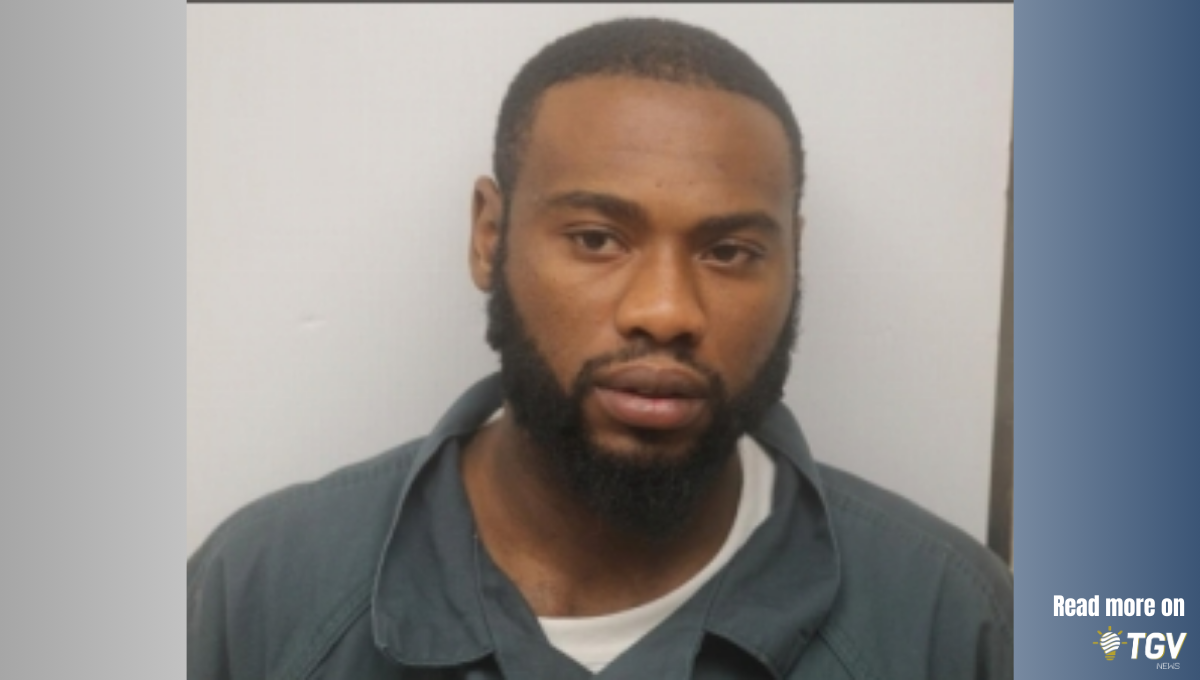
In May 2016, 35-year-old Kiwani Patterson was arrested by the Savannah-Chatham Metropolitan Police Department and the U.S. Marshals Service. A few months later, he was indicted by a Chatham County grand jury for malice murder (Count 1), two counts of felony murder (Counts 2 and 3), possession of a firearm during the commission of a felony (Count 4), and possession of a firearm by a convicted felon during a crime (Count 5).
At trial in February 2020, the State presented evidence which showed that the victim was shot once while inside the home during the early morning hours, at a time when only a small number of individuals, including Patterson, were awake. Witness testimony placed Patterson in close proximity to the victim immediately before the shooting, and evidence showed he left the scene shortly afterward carrying a firearm. Investigators also relied on forensic evidence indicating the trajectory of the bullet and the relative positioning of the shooter, which supported the State’s theory of how the shooting occurred. Patterson later gave statements to law enforcement that were inconsistent with each other and with the physical evidence, further undermining his credibility at trial.
Ultimately, a jury found Patterson guilty of all counts and he was subsequently sentenced to serve life in prison without the possibility of parole for Count 1 and a consecutive 15-year sentence for Count 5.
On appeal, Patterson argued that the evidence was insufficient to support his convictions and raised additional claims, including ineffective assistance of counsel. The Court of Appeals ruled that a rational jury could find Patterson guilty beyond a reasonable doubt. The court also said that resolving conflicts in testimony, assessing witness credibility, and drawing reasonable inferences from the evidence are functions reserved for the jury, not the appellate court.
The Court of Appeals rejected ruling on Patterson’s claim of ineffective assistance of counsel because he didn’t raise the claim earlier, specifically when he requested a new trial in Chatham County.
Patterson appealed to the Georgia Supreme Court, citing insufficient evidence, a trial court error in denying the motion for a new trial in Chatham County, and ineffective assistance of counsel.
This week, the Georgia Supreme Court affirmed the lower court decisions and, effectively, Patterson’s convictions. The high court determined the following:
- The evidence was sufficient to sustain Patterson’s convictions for malice murder and possession of a firearm by a convicted felon during a crime because the State presented evidence that PAtterson was the only other person awake in the house when Bentley was shot. Further, Patterson admitted to being awake, but said the shooting was a drive-by shooting even though the evidence indicated he was shot from above.
- Witness testimony supported that Patterson was the shooter.
Like the Court of Appeals, SCOGA said Patterson’s claims of ineffective assistance of counsel because they were not raised in the motion for a new trial in Chatham.
As a result, Patterson’s sentence remains Life without Parole, plus fifteen years. According to the Georgia Department of Corrections, Patterson is serving his sentence at Ware State Prison in Waycross.