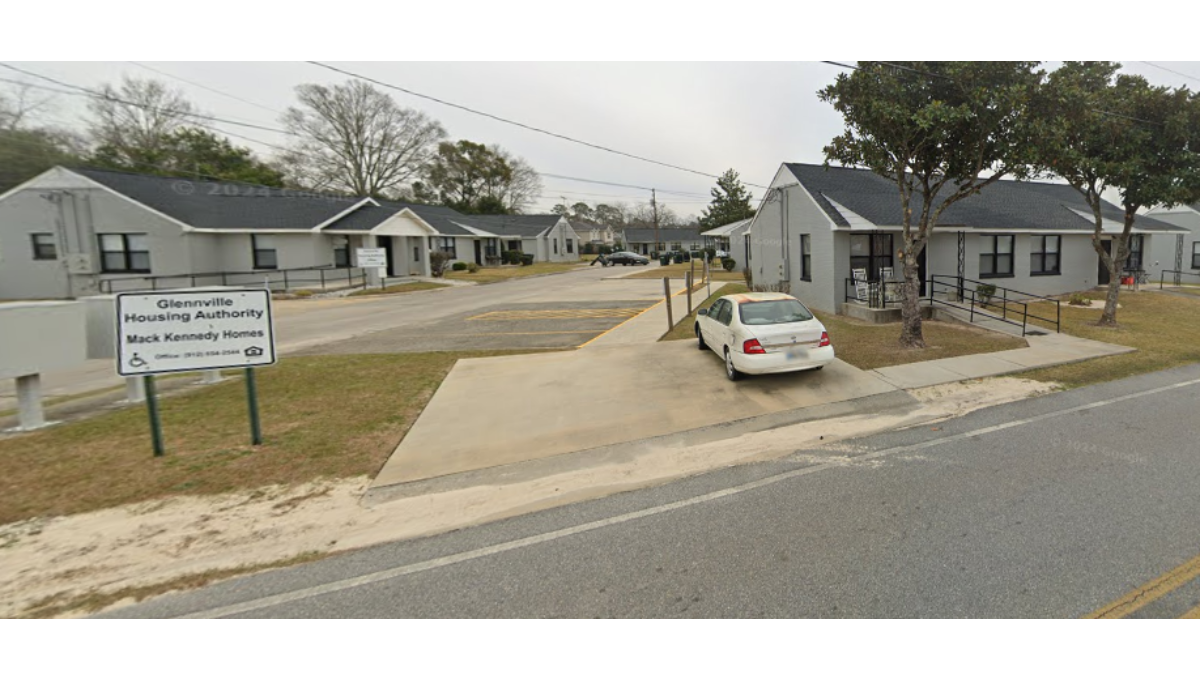
The most recent audit for the Glennville Housing Authority flagged a number of issues with operations including what may amount to fraudulent purchases, questionable contractor payments, and the use of public funds for work performed at personal residences of Housing Authority employees.
The findings raise questions about how public funds were spent, if payments were adequately documented, and what oversight existed to ensure legitimacy when it came to expenditures.
The 71-page report, dated October 13, 2026, covers the fiscal year ending March 31, 2026 and mentions issues with purchasing procedures, contractor oversight, payroll practices, and compliance with federal funding requirements. The findings come as the agency is under investigation by the Georgia Bureau of Investigation, according to the auditing firm, Dunwoody-based Chang & Company CPAs.
Basics on the Housing Authority
The Housing Authority of the City of Glennville is a local public housing agency that provides government-subsidized housing for low-income residents. While the Housing Authority has connections to the City of Glennville, it is its own separate entity.
GHA operates 120 public housing units and another 26 units, supported primarily through tenant rental payments and funding from the U.S. Department of Housing and Urban Development (HUD).
Local housing authorities also have a Housing Authority Board of Commissioners who are appointed by the city or county officials, depending on if it’s a city or county housing authority. The Executive Director is responsible for the day-to-day operations and implementing board policy. The ED answers to the Housing Authority Board of Commissioners.
In Glennville, the Housing Authority Board of Commissioners include Peggy Anderson, Jimmie Nell Cain, Delores Lanier, Mickey Anderson, and Donna Blocker. The Executive Director is Leslie Clifton (formerly Leslie Ellis).
The GBI launched an investigation at the request of the Glennville Police Chief in February of this year.
Purchases linked to nonexistent apartments
The audit report listed 110 purchases from The Supply Company totaling $5,660 between December 2025 and February 2026. The invoices for the purchases listed apartment numbers where the materials were supposed to be used, but in several instances, the associated apartment numbers had no work completed while others listed apartment numbers that don’t actually exist.
The audit stated that the circumstances suggested fraud and fictitious invoices. Additionally, the invoices included signature lines identifying employees authorized to make purchases, but “multiple variations of signatures appeared for the same employee’s name across the invoices.”
The audit report reads:
For one employee, more than five different handwriting styles were identified on invoices bearing that employee’s name. The employee confirmed they were not her signatures. In addition, certain invoices included contractors’ names on the signature line. Contractors were not authorized to approve or make purchases of materials and supplies on behalf of the Authority.
Every one of the 110 expenditures was identified as questionable with a recommendation for additional review and potential recovery. Auditors also suggested the deficiencies were a result of inadequate controls over purchasing, work-order verification, and invoice approval.
The Housing Authority’s Board agreed with the finding and committed to reviewing the transactions and strengthening purchasing controls.
Housing Authority funds, contractors used for work at personal residences
The audit also noted $7,354 in questioned expenditures for work and materials that were purportedly used on personal residences rather than Housing Authority properties.
Auditors determined that the agency had paid for expenditures that were not associated with its public housing operations at all.
The Board agreed with the finding of the auditors and pledged to review the transactions, determine the full extent of the expenditures, and seek recovery of the $7,354.
The audit specifically mentioned allegations involving Housing Authority Executive Director Leslie Clinton, (formerly Leslie Ellis) and Office Manager Stephanie Thomas.
According to the report, a contractor came forward during the GBI investigation and admitted performing personal work for both women while receiving payment via Housing Authority checks.
The report states that work performed at Thomas’ personal residence in Hin September 2025 was identified on a Housing Authority payment as work at Apartment #40. Auditors also described surveillance footage that supported the accounts by the contractors regarding the work at Thomas’s personal residence.
The investigation, auditors wrote, disclosed that Thomas charged materials to the GHA account at Adam’s Poultry in January 2026. In March 2026 – after news broke of the GBI investigation into the Housing Authority – Thomas attempted to pay the company with personal funds. The invoice showed that the Housing Authority had been charged $1,228.97.
Similarly, HVAC work reportedly performed at Clinton’s residence in Hazlehurst in November 2025 was listed as work at Housing Authority Apartment #43.
The report states that the transactions were processed and approved under the direction of the executive director – Leslie Clinton herself.
$78,500 paid for apartment turnovers without evidence tenants moved out
Unit turnovers are defined as work done to prepare a rental property for a new tenant when a previous tenant moves out.
Auditors found that multiple invoices had been paid for turnover work at apartments where rental records did not show that the tenants had moved out – a whopping $78,500.
The rental receipts were linked to tenants who have been active residents who have paid rent for the entirety of the period in question, including after the supposed turnover work was billed.
Contractor payments totaling $441,600 questioned
“The Authority’s failure to restrict and monitor purchasing authority increases the risk of unauthorized purchases, fraudulent activity, inaccurate accounting records, and misuse of Authority or federal funds. Because the invoices may have been signed by individuals who were not authorized to approve the purchases, the Authority cannot demonstrate that all related expenditures were properly authorized and adequately supported.“
One of the largest findings involved $441,600 in contractor payments, payments auditors say required significant examination because they appear to be excessive, unsupported, duplicative, fictitious, or unrelated to services actually performed. Concerns were also noted about contractors lacking proper business registrations, liability insurance, and adequate documentation of services.
Among the questioned expenditures:
John White
- payments to John White for lawn care services totaling $84,500, $19,500 more than the proposal amount of $65,000.
Michael Jinks
payments to Michael Jinks that “substantially exceeded” his annual bid for doing unit turnover work ($28,875).
- Jinks, who previously worked as a Housing Authority employee before converting to an independent contractor in early 2025, received $248,700 during the fiscal year.
- Auditors reported that Jinks frequently received payments of approximately $4,500 per week, sometimes more than once weekly, regardless of the type or volume of work performed.
- Jinks Home Improvement LLC, the business name he used for work, is not a registered business with the State of Georgia and he did not have liability insurance for the fiscal year.
Tashiaca Brown
- Received $20,160 for “consulting services” but the business name she used is not registered with the state and the invoices paid lack sufficient descriptions to detail the work reportedly performed.
While the audit did not fully itemize the $441,600 in questioned costs nor does it state that every dollar was improperly spent, much of the $441,600 was without sufficient support for the expenditures as required by law.
The Board agreed to conduct a comprehensive review and seek reimbursement of amounts ultimately determined to be unsupported or unallowable.
Other financial and operational deficiencies
Finally, the Housing Authority’s financial practices were questioned throughout the audit.
Auditors found that $268,378 in deposits at South Georgia Bank exceeded the protection provided by FDIC insurance and available pledged collateral, leaving those public funds exposed to potential loss in the event of a bank failure.
The agency also issued $1,900 in employee merit bonuses to four individuals classified as independent contractors, even though they were not eligible for employee incentive payments. The audit identified payments of $700 each to M. Jinks and F. Miller, and $250 each to F. Washington and M. Sanders.
Other findings included:
- payroll checks issued before employees completed the corresponding work periods
- contractors operating Housing Authority vehicles without verified insurance coverage
- inadequate liability insurance for certain contractors.
- materials associated with local fund activities were charged to the federally supported Low-Rent Housing Program (approximately $103,700 in local fund labor and turnover work)
- incorrect flat rental calculations for tenants
- missing consent forms
- inadequate verification of household members
- possible unreported income from contract work when a tenant received payments from the Housing Authority for contract labor services.
The deficiencies, auditors said, could result in incorrect rent assessments and incorrect information reported to HUD, in addition to the obvious legal issues presented by the findings.
Board agrees to corrective measures
The Housing Authority’s Board of Commissioners concurred with the audit findings and outlined corrective actions involving purchasing restrictions, invoice verification, contractor oversight, financial controls, and recovery of questioned expenditures.
The agency’s corrective action plan assigns responsibilities to management and the Board, with several corrective measures identified as ongoing.
The auditors also recommended prohibiting employees, House Authority commissioners, contractors, and other individuals from using Housing Authority accounts or vendor arrangements for personal purchases.
The Georgia Virtue will continue to cover this story as it unfolds.