On Thursday, the state’s high court vacated a lower court ruling, offering clarity on when a city can be sued for negligence involving hazards near public roads and how municipal sovereign immunity applies.
The case arose from a 2016 crash in which college student Joshua Chang lost control of his car on Batesville Road when he was traveling to his parent’s home. He left the paved roadway and his vehicle slid more than sixty feet, flipped, and struck a large concrete planter located more than six feet off the road.
According to trial testimony from the investigating police officer, evidence supported the conclusion that Chang swerved because of a deer, other animal, or obstruction and entered the grass shoulder of Batesville Road. Milton has not removed a large planter from its right of way. The planter was formed from a tractor tire wrapped in concrete. Chang’s car struck the planter, and the crash proved fatal.
Police determined that Chang was not under the influence, speeding, or using his phone at the time of the collision. – HLM Law
Chang died as a result and his parents sued the City of Milton, arguing the planter constituted a dangerous defect in the roadway and that the city negligently failed to remove it. They also argued that the planter was a nuisance. A jury found the city liable and awarded $35 million in damages, reduced by seven percent for Chang’s comparative fault.
The City appealed, arguing that the claims were barred by sovereign immunity and also beyond the $2 million city insurance policy limit, but the Court of Appeals upheld the verdict. The Court of Appeals wrote in their opinion that the concrete planter that Chang crashed into was “in the public road” because it was “on the shoulder, in the right-of-way on a City-owned road.” Further, they held that it was a jury’s decision to determine if the planter was a defect that should have been addressed by the City.
The Georgia Supreme Court, however, disagreed.
The high court held that the statute governing road defects, OCGA § 32-4-93(a), does not itself waive municipal sovereign immunity, but instead only limits liability if a claim is otherwise allowed. So, a claim filed by a party must come from another part of Georgia, such as OCGA § 36-33-1(b) which allows suits against municipalities for negligence in performing ministerial duties. The Court reaffirmed that cities have a ministerial duty to keep streets and sidewalks reasonably safe for travel. However, the Court ruled that this duty is limited to keeping the lanes of travel and areas intended for ordinary travel safe. It does not extend to property outside those lanes, such as roadside areas that a driver might encounter only after leaving the roadway.
Because Chang’s vehicle left the road and traveled more than six feet before striking a planter located off the paved roadway, the Court concluded the claim did not involve the city’s ministerial duty to keep travel lanes safe. As a result, the Court determined that the statutory waiver of municipal immunity did not apply to that negligence claim.
“Our conclusion that the claim does not fall within the scope of this particular ministerial duty says nothing about the City’s general duty of care relevant to this claim,” the opinion reads.
The Court vacated the Court of Appeals’ ruling and sent the case back for further proceedings, leaving open whether other potential waivers of immunity, like the claim beyond the city’s insurance policy limit, or the Chang’s nuisance claim could still apply.
Justices Ellington and Colvin dissented, arguing that earlier precedent suggests a city’s duty to maintain safe streets should extend to all areas of the roadway where the public has a right to travel, including shoulders.
Colvin cited case law precedent in writing, “I would hold that a municipality’s duty to keep its streets and sidewalks safe extends to “all parts of its” municipal street system “which are intended to be used by the public” and “over which the public ha[s] a right to pass.”
Under that interpretation, the dissent concluded the city’s immunity would have been waived and the lawsuit allowed to proceed.
Read the Georgia Supreme Court Opinion on City of Milton v. Chang
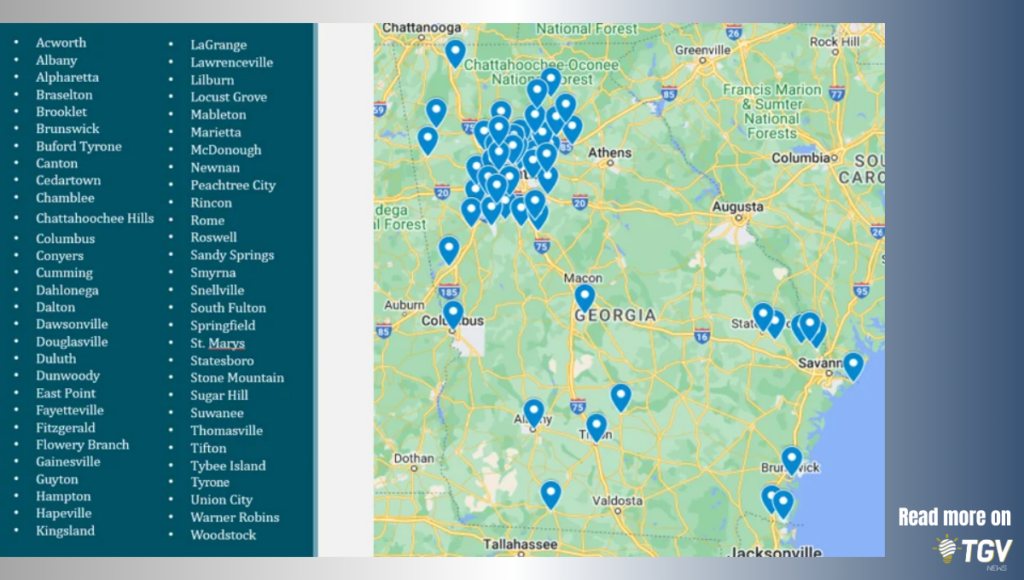
Georgia Power, the Georgia Municipal Association, and more than 60 Georgia cities supported the City of Milton in their appeal.
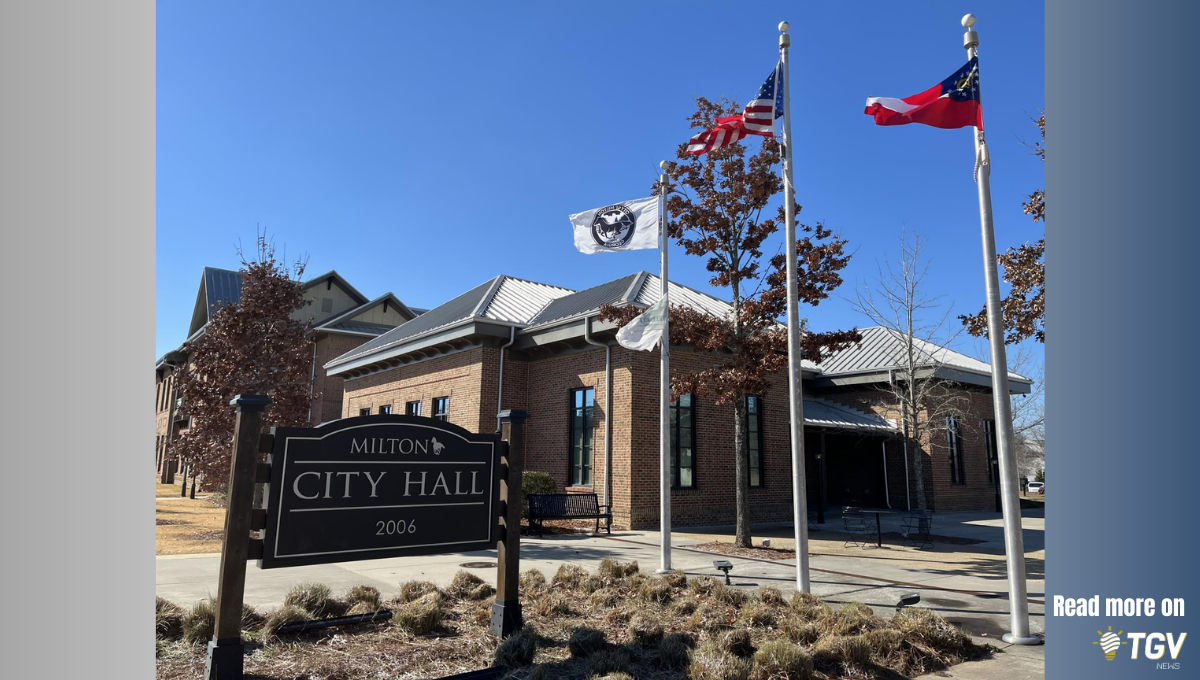
Below are Q&As posted on the City of Milton’s website after the initial Court of Appeals ruling.
Statement from Mayor Peyton Jamison
The story “Appeals court affirms $32.5 million judgment against Milton” (Appen Media, Sept. 23, 2024) provided an unbiased compendium of events, but several critical facts were omitted. The result is some readers have misunderstood the City’s role in the litigation and have drawn inaccurate conclusions.
The article references instances where lawyers representing the City rejected settlement offers. Let me be clear that neither city officials nor our legal counsel played any part in defending the City during this case. It was taken out of our hands. The Georgia Interlocal Risk Management Agency (GIRMA), our insurer, was responsible for managing legal representation. GIRMA is solely responsible for settling, or not settling, the claims it defends on the City’s behalf. Neither the City nor its legal team were given a role in settlement negotiations.
What happened to Mr. Chang was certainly a tragedy, but we firmly believe the City of Milton should not be held liable. As such, we will continue to pursue a reasonable outcome to protect the City and taxpayers from this unjust financial burden.
QUESTION: Was the City of Milton involved in the defense of this case?
ANSWER: NO. The City’s insurer, the Georgia Interlocal Risk Management Agency (GIRMA), has sole authority on the settlement of claims.
QUESTION: Who has GIRMA brought on as legal representation?
ANSWER: The trial court portion of the Chang case is over for the time being. Litigation is now proceeding in the Supreme Court. In the Supreme Court litigation, GIRMA has retained Harold Melton, a former Chief Justice of the Georgia Supreme Court, and his Atlanta-based law firm, Troutman Pepper. Melton and his firm have significant experience in cases before the Georgia Supreme Court. Their attorneys are skilled in presenting complex legal arguments and have a track record of success in appellate litigation, particularly in high-stakes and precedent-setting cases.
QUESTION: Were the Mayor, City Council, City Attorney, or other city officials asked to approve or disapprove settlement negotiations with plaintiff’s attorney?
ANSWER: NO. The City was not asked to approve or disapprove settlement negotiations with the plaintiff prior to the jury verdict. In fact, there were no meaningful settlement offers exchanged between GIRMA and the attorneys for Chang. In one instance, late in the litigation, the City independently demanded that GIRMA make a settlement proposal but the City’s request was rejected by GIRMA.
QUESTION: Will the City file a motion seeking reconsideration of the Court of Appeals judgment?
ANSWER: YES. That motion has already been filed.
QUESTION: If the motion for reconsideration is unsuccessful, will the City ask the Supreme Court to review the case?
ANSWER: YES.
QUESTION: Is the Supreme Court required to review the case?
ANSWER: NO. The Supreme Court has discretion on whether to hear the case.
QUESTION: Is there a timeframe by which a final decision may be forthcoming?
ANSWER: YES. On December 4, 2024, former Chief Justice Melton (GIRMA’s attorney in this case) filed a Petition for a Writ of Certiorari with the Georgia Supreme Court requesting that the court review the case. On December 13, 2024, 58 Georgia municipalities filed an amicus (or, friend of the court) brief supporting Milton’s request for Supreme Court review. Once all of the briefing is completed, the Supreme Court will issue a decision on whether to take the case within 90 to 120 days.
QUESTION: Outside of the court proceedings, are there other steps Milton is taking to address the judgment?
ANSWER: YES. In consultation with the City Attorney, the City is reviewing other options that may reduce the City’s monetary exposure. Those options are not subject to disclosure at this time.
QUESTION: What is the City’s potential financial exposure?
ANSWER: The City’s insurance covers up to $2 million of potential financial exposure. The initial judgment awarded damages of $32.55 million, though that number will be higher now due to interest. The City is aggressively exploring opportunities to reduce or eliminate its financial exposure.