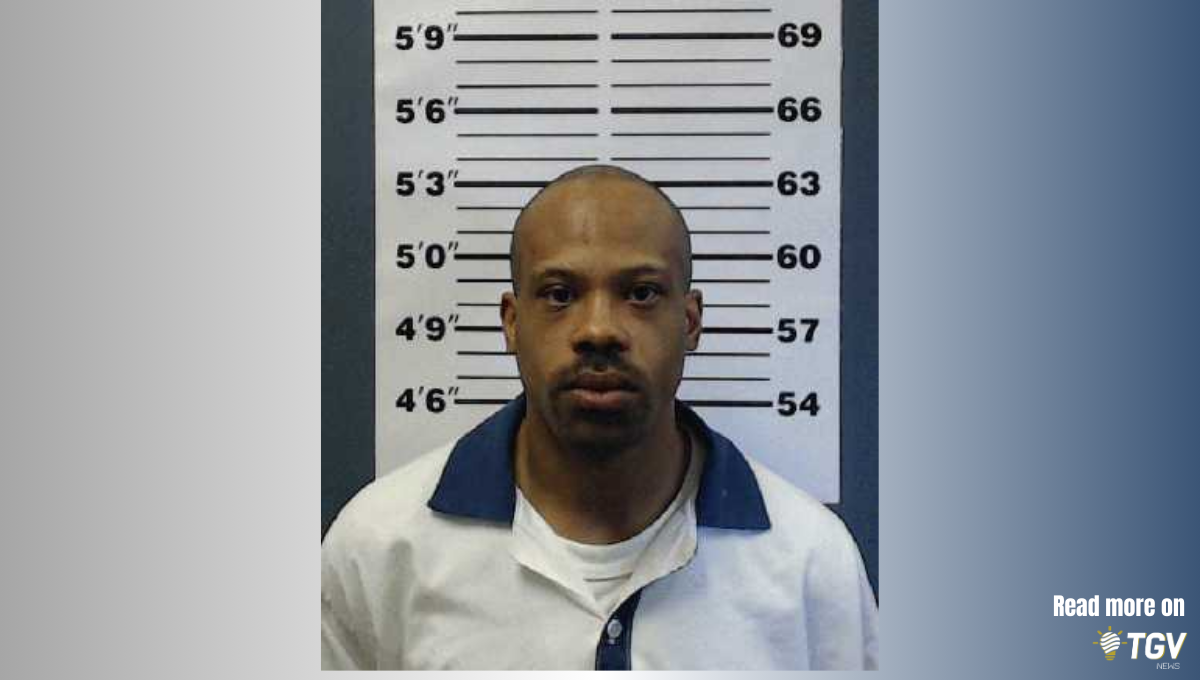
The state’s high court upheld the murder conviction of a man tried for a double murder in Toombs County, but one justice used the opinion as an opportunity to criticize Georgia’s post-conviction procedures for defendants.
The Georgia Supreme Court issued an opinion Tuesday affirming the convictions of Joshua Sanders for the murders of Latorey Harden and Pamela Harden, Latorey’s mother. Both were shot in a January 6, 2022 shooting in Vidalia following a brief and volatile romantic relationship between Latorey Harden and Joshua Sanders.
The Court said that evidence at trial, including surveillance video, eyewitness testimony, and Sanders’ own testimony, supported the jury’s finding that Sanders shot and killed both victims outside Latorey Harden’s residence. Sanders was convicted on multiple counts and sentenced to consecutive Life sentences without parole, along with additional prison time for firearms-related offenses, Cruelty to Children charges, and theft matters.
On appeal, Sanders contended that his attorney in his Motion for a New Trial was ineffective for failing to claim in the legal filings that trial counsel improperly handled Sanders’ direct testimony. Sanders said this damaged his character before the jury.
The Georgia Supreme Court rejected this claim, ruling it was procedurally barred because Georgia law requires ineffective assistance of trial counsel claims to be raised during the Motion for New Trial stage, not later on in the appeals process.
Because Sanders’ argument attempted to revive a claim that should have been raised earlier, the high Court affirmed the lower court ruling. The opinion noted that any claim regarding the effectiveness of counsel assisting with post-conviction proceedings must be pursued through habeas corpus proceedings.
In a concurring opinion, Chief Justice Nels Peterson agreed with the affirmation of the lower court ruling, but criticized Georgia’s post-conviction system, arguing that the requirement to litigate ineffective assistance claims during motions for new trial has created delays, inefficiencies, and excessive costs for the courts, prosecutors, and for public defenders.
Justice Peterson described Georgia as an outlier compared to federal courts and most states, which typically address such claims in habeas proceedings, and urged the Georgia General Assembly to reform the system through legislative action.
“Georgia’s post-conviction litigation system is a mess. It’s a mess in large part because of a series of well-meaning but short sighted decisions this Court made over the course of several decades. Those decisions had a worthy goal: seeking to ensure that indigent defendants were entitled to appointed counsel for litigating claims of ineffective assistance of counsel. But the means we used to pursue that goal have made things worse, not better...
…The result of all of this is that we have backed into a system that prioritizes ineffectiveness claims (which have a low success rate) in exchange for imposing serious costs. Substituting new counsel and then litigating a motion for new trial (including an evidentiary hearing) inevitably takes materially longer to do, even under the best of circumstances. Moreover, preventing trial counsel from litigating (or at least being involved in) the appeal makes much harder the litigation of claims of preserved trial court error (which have a higher success rate).
Given the shortcomings of our system, it is unsurprising to learn that we have made ourselves an outlier. The federal government and most states leave ineffectiveness claims for resolution on habeas.
Given that our system delays the resolution of nearly all criminal direct appeals, that means that when we do reverse or vacate a judgment, the passage of time has rendered retrial harder (if not impossible): witnesses may have died, memories have faded, evidence may have been lost, etc. And in those rare cases in which a conviction is reversed for reasons that mean the law prohibits the State from retrying the case, the defendant entitled to release has wasted years of their life in prison first.
We also do all of this in the most inefficient way possible. This system forces district attorneys’ offices to divert resources from prosecuting crimes and instead, as soon as a defendant is convicted and sentenced, spend years relitigating all of the same issues in the same court on the motion for new trial. It forces public defender offices to stretch limited dollars to provide multiple lawyers to complete a single direct appeal that takes only one lawyer in most other states and the federal system.
No rational person would have chosen the system we have today if presented with it as a whole. And thoughtful leaders in the public defender community have at times advocated for change.
But because this system evolved slowly over decades, we haven’t paused to consider the brokenness of the system. We should.“
According to records for the Georgia Department of Corrections, Sanders is currently serving his sentence at Hays State Prison.