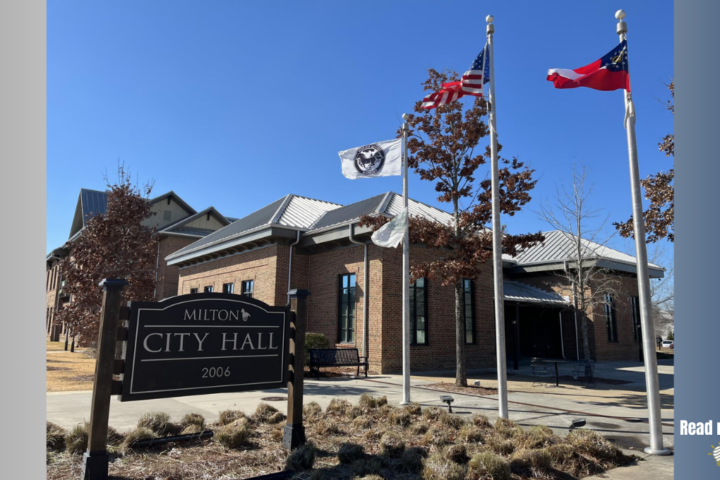
After the Georgia Supreme Court vacated a lower court ruling earlier this year on when a city can be sued involving negligence involving hazards near public roads and when immunity applies, the City of Milton and the family of a young man who lost his life have settled.
Background
The case arose from a 2016 crash in which college student Joshua Chang lost control of his car on Batesville Road when he was traveling to his parent’s home. He left the paved roadway and his vehicle slid more than sixty feet, flipped, and struck a large concrete planter located more than six feet off the road. The planter was reportedly seven to eight feet in diameter.
According to trial testimony from the investigating police officer, evidence supported the conclusion that Chang swerved because of a deer, other animal, or obstruction and entered the grass shoulder of Batesville Road. Milton has not removed a large planter from its right of way. The planter was formed from a tractor tire wrapped in concrete. Chang’s car struck the planter, and the crash proved fatal.
Police determined that Chang was not under the influence, speeding, or using his phone at the time of the collision. – HLM Law
Chang died as a result and his parents sued the City of Milton, arguing the planter constituted a dangerous defect in the roadway and that the city negligently failed to remove it. They also argued that the planter was a nuisance. A jury found the city liable and awarded $35 million in damages, reduced by seven percent for Chang’s comparative fault to $32.55 million.
The City appealed, arguing that the claims were barred by sovereign immunity and also beyond the $2 million city insurance policy limit, but the Court of Appeals upheld the verdict. The Court of Appeals wrote in their opinion that the concrete planter that Chang crashed into was “in the public road” because it was “on the shoulder, in the right-of-way on a City-owned road.” Further, they held that it was a jury’s decision to determine if the planter was a defect that should have been addressed by the City.
The Georgia Supreme Court, however, disagreed. In March of 2026, the Supreme Court of Georgia narrowed the circumstances under which cities may be held liable in ordinary negligence for dangerous conditions outside the lanes intended for travel.
Two justices dissented to the high court ruling, arguing that earlier precedent suggests a city’s duty to maintain safe streets should extend to all areas of the roadway where the public has a right to travel, including shoulders.
One justice cited case law precedent in writing, “I would hold that a municipality’s duty to keep its streets and sidewalks safe extends to “all parts of its” municipal street system “which are intended to be used by the public” and “over which the public ha[s] a right to pass.”
The case was particularly unique because Georgia Power, the Georgia Municipal Association, and more than 60 Georgia cities supported the City of Milton in their appeal.
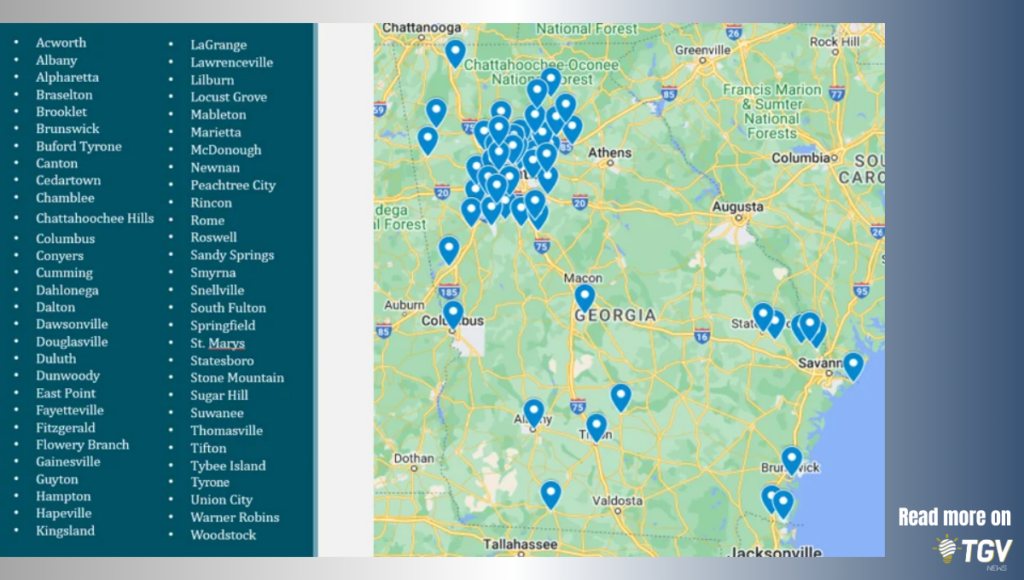
You can read the full rundown of the SCOGA ruling from March 2026 in this link.
Settlement
In an announcement made earlier this week, the City of Milton and the family of Chang agreed to a settlement of $10 million, ending a decades-long legal battle. Attorneys said despite the high court narrowing of liability for negligence by cities, Georgia law still preserves an exception for dangerous conditions that rise to the level of a nuisance and that exception is what allowed the Chang family to resolve their case.
The Georgia Interlocal Risk Management Agency is responsible for providing $6.67 million towards the settlement and the city of Milton will pay $3.33 million.
Jeffrey R. Harris and Jed D. Manton of Harris Lowry Manton LLP, who represent the Chang family, issued the following statement:
“No settlement can undo the loss of Joshua Chang, a young man who had an incredibly bright future, but we hope this brings his family some measure of closure. His death, caused by a concrete planter placed dangerously close to a road, was a preventable tragedy. We hope his legacy prompts cities to take roadway hazards seriously. A decoration is not worth a life.”
A memorial is also planned to pay tribute to Chang. Details are expected to be released at a later date.