Bulloch County officials heard proposed changes to the county’s administrative policies for roads, highways, and bridges, including a new framework for determining how unpaved roads move from citizen requests to potential paving projects.
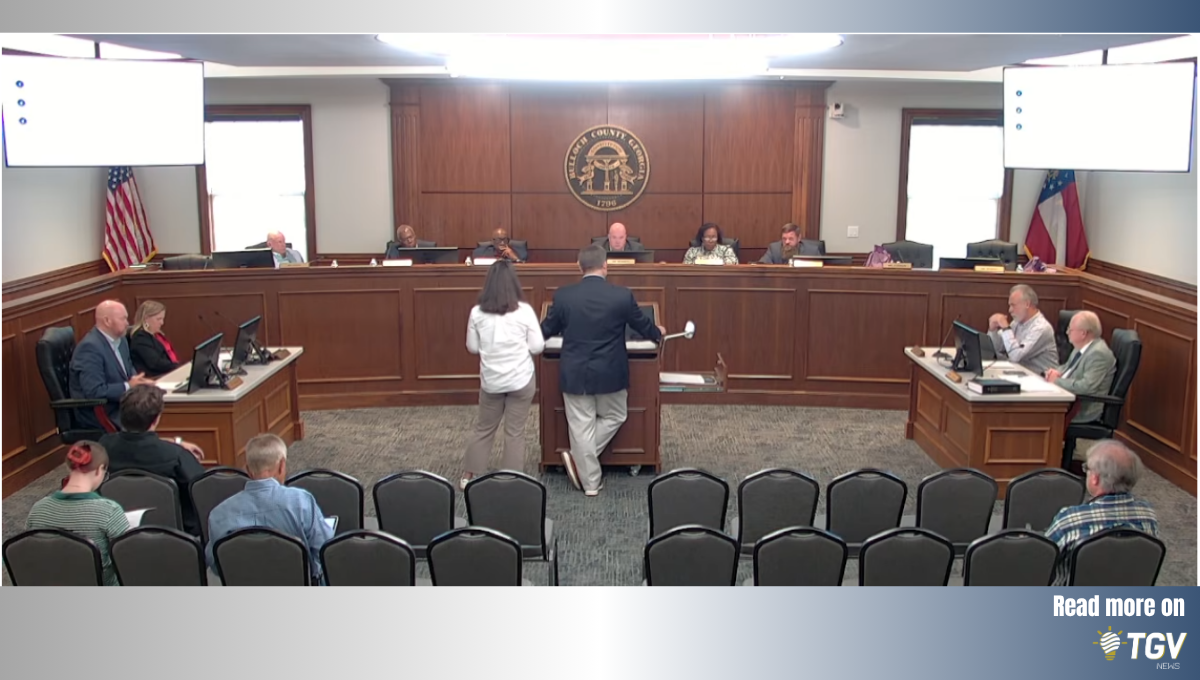
Assistant County Manager Crystal Dawson and County Engineer Ron Nelson presented draft revisions to the Board of Commissioners Tuesday morning, with much of the discussion focused on creating a structured, transparent process for evaluating dirt roads and determining which projects should advance for engineering, right-of-way acquisition, funding, and eventual construction.
Dawson told commissioners that the county currently has no formal process for moving a road from unpaved to paved status. The proposed revisions would establish that process while moving away from the county’s current petition process.
Dawson said the current signature process can “give a false sense” of what is actually going to happen with a road. A petition or collection of signatures does not necessarily mean a road will be paved.
Nelson also added that ‘paving’ is not just paving, but includes drainage improvements, which must also be considered. For that reason, Nelson said paving dirt roads is currently estimated to cost between $1.5 million and $2 million per mile.
The proposed policy will return to commissioners for a vote at a later date, but Dawson and Nelson said staff wanted feedback from the Board before finalizing the revisions. The draft also has not yet been reviewed by the county attorney.
Policy Generally
Sections 1 – 10 changed very little. The established framework for administration, private-property limits, maintenance, driveways, signs, traffic studies, and surplus dirt remains largely the same.
Sections 14-18 also have very little change proposed as they pertain to road abandonment, road tax districts, right-of-way acquisition, encroachments, easements, and traffic-calming provisions.
Sections 11-13 include more changes related to transportation project administration and programming.
In summary, the presentation indicated “most day-to-day rules remain familiar” and the update “adds structures for selecting, evaluation, funding, and approving capital road projects.”
Section 11 – Major Transportation Construction Projects
County Engineer Ron Nelson said the section addresses how the county programs major transportation projects.
- Purpose and Control: Creates one policy framework for major transportation improvements. Administration rests with the County Manager, Transportation Director, County Engineer, or a qualified designee.
- Eligible Work: Road widening, rehabilitation, reconstruction, intersections, dirt-road paving, bridges, sidewalks, multi-use trails, safety projects, and intergovernmental projects.
- How Projects Move Forward: Staff weighs traffic, functional classification, pavement, or bridge condition, drainage, emergency access, economic development, funding, adopted plans, and declared disasters.
- Delivery Rules: Qualified professionals design major projects. The County may acquire property interests through lawful means, use multiple funding sources, and deliver construction with County forces and procured contractors.
Section 12 – Programming Road Rehabilitation and Paving Projects
- Program Owner: The Transportation Director develops recommendations based on available funding and documents transportation needs.
- Evaluation: Priorities may reflect pavement condition, traffic, road function, crashes, drainage, maintenance history, safety, and funding. Paving evaluations also consider right-of-way, environmental impacts, utilities, construction cost, and maintenance benefits.
- Projects Covered: Pavement preservation, resurfacing, reconstruction, paved shoulders, drainage work, and improvements or paving on County-maintained unpaved roads.
- Limits: Every project remains subject to funding and Board approval. Eligibility does not created a guaranteed schedule or a vested right to improvements.
Nelson said it’s important to note that eligibility does not create a guaranteed scheduled or a vested right for the projects. Additionally, an annual review will allow the program to respond to changing road conditions and available revenue.
Section 13 – Unpaved Roads Capital Improvement Program and creates a phased process
Creates a phased, transparent route for determining whether a specific unpaved road can and should advance toward a TSPLOST funded project.
DRIP – Dirt Road Improvement Program
Uses Decision Gates from Request to Construction
- Phase I – Screen Eligibility – public status, maintenance, right-of-way, engineering fit, public benefit, preliminary needs
- Phase II – Engineering feasibility and rough costs
- Approve Phase II – Present findings to Board of Commissioners and receive approval to enter into ROW acquisition via quitclaim deeds. At least 80% of property ownership and 80% of road length donate a minimum 60-foot right-of-way. Timeframe= 1 month/parcel
- Complete Phase III – Confirm total cost, funding, priority, and receive Board approval for project budget
- Design and Construct – Meet County, GDOT, legal, and permitting standards
- Evaluation does not guarantee design, funding, scheduling or reconstruction. The County may postpone, reprioritize, modify, or end a project.
DRIP Minimum Eligibility Requirements
- Public Road
- Active Maintenance – Road Maintenance currently maintains the road
- Right-of-way support – Sufficient right-of-way exists or can be acquired
- Engineering fit – The road can meet applicable County engineering standards
- Other risk factors – No unresolved title, legal, environmental, or permitting issue prevents delivery
Phase I
Staff Considers:
Daily traffic and residences served
Emergency access and school bus use
Connection to paved public roads
Proximity to homes, farms, water features, and other constraints
Drainage, flooding, geometry, and safety
Consistency with the current Long Range Transportation Plan
Phase II Defines Feasibility
Engineering – Concept through final design and bid documents
Right of Way – Verification, boundary research, administration, and potential acquisition
Environmental – permitting level and estimated mitigation
Utilities – conflicts and likely relocation costs
Construction – rough order of magnitude for construction delivery
County Engineer then combines the five rough order estimates into an overall project budget
Phase III – Feasible Projects and Funding
Full cost Picture – design/engineering, right-of-way administration and settlements, utility relocation and environmental mitigation, construction and long-term maintenance
Funding Test – staff considers grants and available local transportation funding. A road enters a future fiscal year program only after it completes all phases, remains financial feasible, and has adequate funding.
Prioritization
A weighted scoring system may consider safety, traffic, residences served, emergency response school bus use, draining, connectivity, cost effectiveness, and outside funding.
Funding still requires Board approval.
Commissioner Feedback
Nelson asked for feedback from the Board of Commissioners on criteria, the process, how to handle old petitions, and any other Board concerns.
He said staff wanted to know what weight the criteria should be given and how they think old petitions should be handled. Staff’s recommendation, he said, would be to address the oldest petitions first and move forward from there.
Commissioner Nick Newkirk asked about funding and when money would be expended in the process.
He said he was favorable to the proposal so far, but will need to read through the whole presentation from staff. “We’ve got to do something different than what we’re doing though. We’re spending too much money up front and we don’t even know if we’re going to get the property in the end.”
Commissioner Ray Davis asked, if upon adoption, there could be a clear distinction between things approved under the old process and what is moving forward under the new process. Staff said they would bring a complete list for commissioner consideration which would detail which roads are operating under the previous process and what stage those projects are at when the new process is adopted.
Commissioner Ray Mosley said he believed that would be critical.
Commissioner Anthony Simmons added that “any time you get a citizen involved in getting a road paved, and really pushing it, it seems to go by a little bit quicker.”
Newkirk asked how many ‘old petitions’ are pending. Nelson said 20-25 with the older being at least 15 years old. County Attorney Jeff Akins added that he’s been county attorney for nearly 30 years and, in some instances, there’s a reason the petition hasn’t moved forward: a lacking cooperation by the property owner. He said the condemnation tool is there for commissioners to consider in those instances.
Chairman David Bennett asked when the county attorney could review the proposal. Akins said ‘within a week.’
Dawson, however, asked for a slightly longer time frame to submit to the county attorney for review so that county commissioners can share their feedback with staff and edits can be made. She said it would also allow time for the county engineer to put together a list of old roads with pending petitions and proposed recommendations.
“Is it something you would like to see before the end of the year or into the new year?” Dawson asked commissioners.
Bennett said a final draft before the end of the year would be helpful.
No action was taken.
Commissioners Toby Conner and Timmy Rushing were not present.