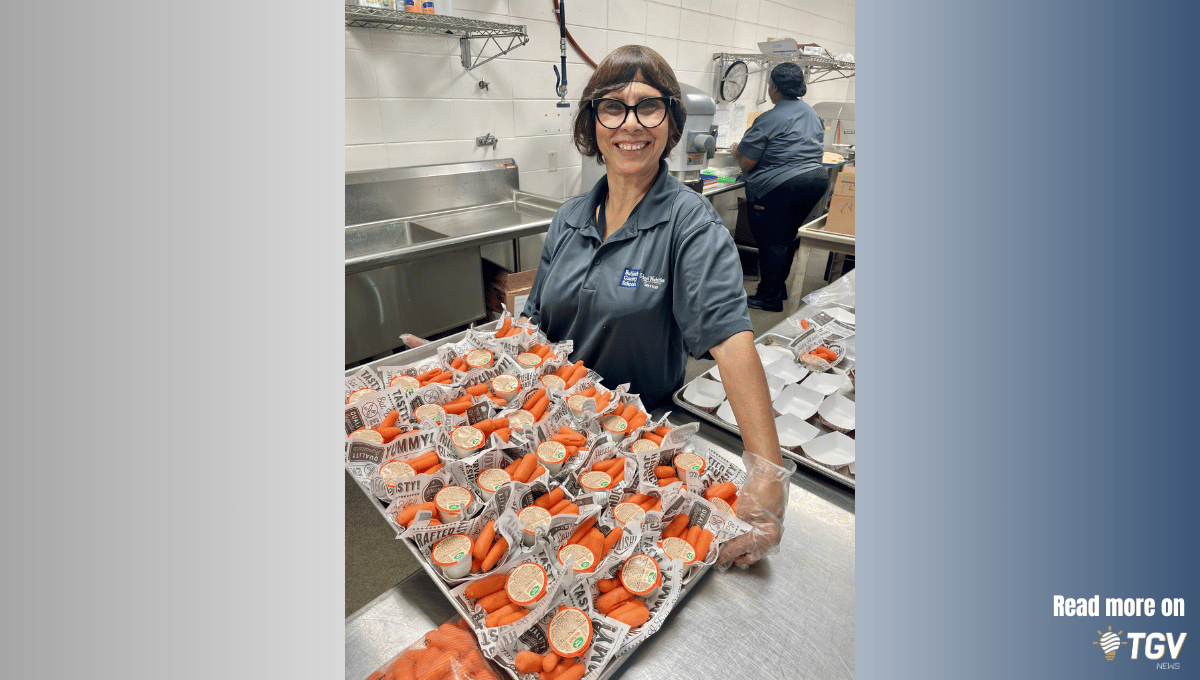
Over 16 days in June, Bulloch County’s School Nutrition Services prepared and served 65,620 meals for children 18 years of age and younger, nearly 10,000 more meals than the previous summer.
“This did not happen by accident, said Desiree Yaeger, director of School Nutrition for Bulloch County. “It happened because our employees showed up early, worked hard, believed in our goals, and served every family with kindness, heart, and purpose.”
Yaeger shared that she could not be prouder of her team and other employees who volunteered. “Every sandwich wrapped, every piece of fruit packed, every smile shared, and every meal served made a difference this summer, and they made it look so easy,” she said.
Bulloch County’s School Nutrition Services is committed to serving nutritious, well-balanced meals to students daily. It is a vital part of the school district’s mission to prepare students for success. Through the United States Department of Agriculture’s (USDA) National School Lunch Program, the National School Breakfast Program, and the Seamless Summer Program the school district increases children’s access to school meals.
“We like to say that we serve meals at school, not school meals,” Yaeger said.
These are some of the statistics of the program for the 2025-2026 school year:
- Total meals served in 2025-2026: 1,802,238
- Breakfast meals served: 656,419
- Lunch meals served: 1,145,819
- Total summer meals served in June 2025: 55,828
- Total summer meals served in June 2026: 65,620
- Average number of meals served per day: 10,307
- Average daily breakfast participation: 36.7% of students
- Average daily lunch participation: 64.2% of students
- Local food expenditures with farmers: $85,379.04
When the new school year begins on August 3, these are some of the top reasons why families should consider letting their children eat meals at school:
- Free breakfast for all; Free lunch for most: Breakfast is free for all students, and lunch is free for all students at 12 of our 15 schools eligible for the USDA’s Community Eligibility Program. Eating meals at school can ease your grocery budget.
- Mealviewer Mobile App & digital menus: Our Mealviewer mobile application and its digital menus are ADA accessible, translatable, and allow families to view food ingredients and set up alerts to be notified when menus include known allergens.
- Farm to School Program: Our Farm-to-School Program is adding more locally-sourced produce and proteins grown by farmers we know to our school meals.
- Taste testing with students: Our School Nutrition Services staff hosts taste testing events with student focus groups to gather input from our most important customers.
- Food Guide for Better School Purchasing: Our School Nutrition Services uses the Food Guide for Better School Purchasing to ensure we purchase food products with only safe ingredients.
- Pursuing Eat Real Certification: Our School Nutrition Services Department is one of only three programs in Georgia selected to pursue an Eat Real Certification. The two-year certification process for K-12 food service leaders consists of 10 evidence-based standards that measure 34 key performance indicators in a school district’s menu plans and procurement practices to ensure their menus are more delicious, nutritious, and responsibly sourced.
- Member of the Healthy Kids Collaborative: Our School Nutrition Services director, Desiree Yaeger, is a member of the Healthy Kids Collaborative, an invitation-only program of the Culinary Institute of America that seeks to accelerate innovation and deepen technical and professional expertise in K-12 school food. Yaeger is one of only two school nutrition directors in Georgia who are members.
- One of the largest restaurants in Bulloch County: We employ 85 staff who work to prepare and serve more than 1.8 million meals annually across 16 school cafeterias.
- Our cafeterias are inspected just like restaurants: The Department of Public Health regularly inspects each of our school kitchens at least twice annually, and we consistently score 98 to 100.
- Offer versus serve method: We use an offer-versus-serve method. This means our food service staff will encourage and offer for students to try food items, but students may refuse any food items they do not want. The offer-versus-serve method reduces our food costs by decreasing waste.