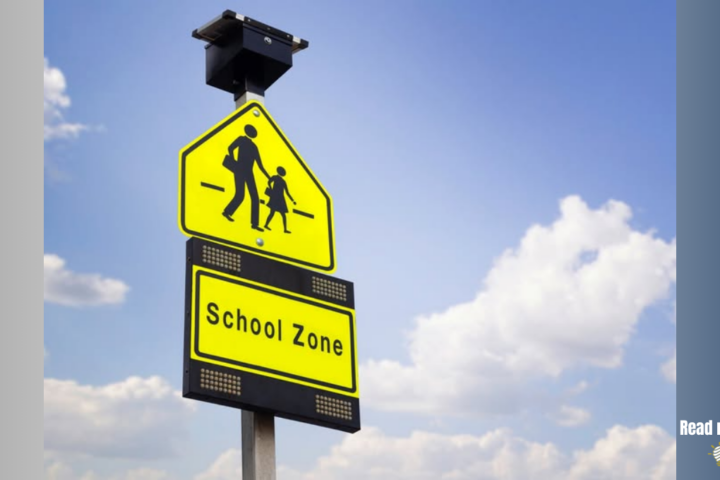
As students return to classrooms, the City of Guyton has announced it will not activate its school zone speed cameras outside Guyton Elementary School, citing recent changes to Georgia law and a plan to re-evaluate their use in the city limits.
The announcement was made on the city Facebook page Monday.
“As the new school year begins, we want our community to know that the City of Guyton will not be activating the school zone speed cameras at this time,” the city said. “With the recent changes made by HB 651, we believe it is appropriate to pause activation while we evaluate the best long-term approach for our community.”
The city, in its post, emphasized that student safety remains the priority and urged motorists to obey reduced speed limits whenever school zone lights are flashing.
“The safety of our students remains our top priority and we ask every driver to slow down, stay alert, and obey the posted school zone speed limits when lights are flashing,” the statement said.
Effingham County Schools return Wednesday, August 5, but the ‘pause’ would apply only to the school zone within the city limits of Guyton.
Mayor to Place Matter on Council Meeting Agenda
Mayor Andy Harville said on social media that he intends to place the issue on the agenda for consideration of full removal. In a statement provided to TheGeorgiaVirtue on Tuesday, he said:
It has come to my attention that Blue Line Solutions has proposed amendments to existing agreements in response to recent changes in Georgia law regarding automated school zone speed enforcement cameras.
After reviewing the proposal, I have serious concerns about the approach being taken and whether it aligns with the intent of the Legislature to provide citizens a voice in these decisions. While Blue Line is entitled to its legal interpretation, I believe the spirit of this legislation was to increase transparency and accountability and not create a way to avoid public involvement.
Personally, I do not support the use of automated school zone speed cameras or Flock camera systems. While public safety is always a priority, I believe it is best achieved through accountable law enforcement. I intend to bring this matter before the Guyton City Council and I will vote to discontinue the use of these systems. I believe our citizens deserve a government that prioritizes transparency, accountability, and decisions made in the best interest of the community.
The next city council meeting is Tuesday, August 11 at 7:00 p.m.
Changes to State Law
The announcement follows the effective date of House Bill 651, approved by the Georgia legislature earlier this year.
The measure allows school zone speed cameras to remain in place, but imposes tighter restrictions on how local governments use them.
The initiative in the General Assembly followed years of complaints from Georgians who opposed their use, cited numerous instances of the cameras operating improperly, and referred to the cameras as revenue generators as opposed to ‘safety tools.’ Namely, the civil infraction is mailed to a driver 30 days after the alleged offense occurs, which, unlike a present law enforcement officer, does not stop the infraction while it’s occurring.
Under the revised law, the citations can only be issued if a driver is traveling more than 10 miles per hour over the posted school zone speed limit – a substantial change from the 1 mph over the speed limit enforcement that preceded.
HB 651 also requires more prominent warning signs for drivers regarding automated enforcement, mandates regular accuracy testing of camera equipment, changes notice requirements for citations, and creates a formal complaint process allowing the state to investigate allegations of misuse. Local governments who do not follow the procedures can be punished by the state, though similar enforcement mechanisms used by the state are rarely used.
Among the more controversial changes, at least for local governments, is the change to how the revenue collected can be spent. The legislation narrowly limited revenue to specific public safety and law enforcement as opposed to broad municipal operations or school system slush funds.
HB 651’s biggest change begins in 2027 when cities and counties will have to hold a voter referendum to allow local approval by voters before the cameras can be used. Each ‘approval’ is for a term of six years, but if voters reject the referendum, local governments must wait three years before again placing it on the ballot.